The Translatability of the Scriptures in Christianity and Islam
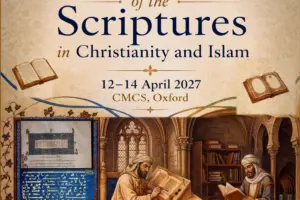
International Conference
The Translatability of the Scriptures in Christianity and Islam
April 12th-14th 2027 at CMCS Oxford
Call for Papers
Co-organized by the United Bible Societies’ (UBS) TAZI initiative (Taurat Anbiya Zabur Injil)
and the Centre for Muslim-Christian Studies Oxford (CMCS)
The Translatability of the Scriptures in Christianity and Islam seeks to bring together scholars, translators, theologians, and practitioners engaged at the crossroads of translation studies, Muslim-Christian relations, and interfaith dialogue. Translation raises profound theological, hermeneutical, and political questions that directly challenge the very possibility of translating texts regarded as divine revelation. This gathering aims to create a forum for critical reflection on how translation mediates, challenges, and transforms Christian and Muslim engagements with their respective scriptures, and the scriptures of each other.
A central concern of the conference will be the issue of inspiration and translatability. For Christians, the notion of divine inspiration is often articulated in relation to the Bible as the “Word of God” expressed through human authorship in Hebrew, Aramaic, and Greek. In Islamic thought, tanzīl—the direct “sending down” of the Qur’an in Arabic to the Prophet Muhammad—is closely tied to ideas of inimitability and untranslatability. Participants are invited to examine how differing theological understandings of inspiration shape conceptions of scriptural translatability, raising questions such as: Can the divine word be truly rendered into another language? What remains untranslatable, and what does
translation itself reveal about revelation?
The organisers invite paper proposals, from established, early career and postgraduate scholars, on these themes:
• The issue of inspiration and translatability.
• The challenges of translation practice in both traditions.
• The role of translation in scriptural interpretation.
• Issues of censorship, restriction, and control of translations.
• The intersection of gender and translation, regarding decisions that profoundly affect the visibility of women and the gendered language of scripture.
• The growing impact of artificial intelligence on the translation of sacred texts.
The goal is to deepen understanding of how translation—whether resisted, contested, or embraced—remains central to the lived realities of Christian and Muslim communities and to interfaith engagements in the twenty-first century. Papers on either Christian or Muslim perspectives, or on both, are welcome. An important focus of the conference will be not
just translation, but the implications of (un)translatability.
Conference fee: £65 (to cover lunches, refreshments and conference dinner)
NB Delegates will be responsible for their own accommodation and travel costs. Some accommodation has been secured in an Oxford college near to CMCS. A limited number of bursaries towards travel and accommodation may be available for confirmed speakers.
Submission Guidelines: Proposals (300-400 words) plus a short biography (150 words) should be sent to Dr Martin Whittingham, m.whittingham@cmcsoxford.org.uk by October 31st 2026. We aim to give a response to submissions by November 13th after a peer-review process by an interdisciplinary committee.
We invite 30 minute presentations. Full text of papers (5-6000 words, which can be in draft) will be requested in time to circulate two weeks before the conference. Selected papers will be considered for publication in a peer-reviewed edited volume or special issue.
The conference will be in person, though some online attendance may be possible.
Convenors
Dr Mohammed Gamal Abdelnour (CMCS Oxford)
Dr Sameh Hanna (UBS TAZI)
Dr Andy Warren-Rothlin (UBS TAZI)
Dr Martin Whittingham (CMCS Oxford)
Conference website: https://www.cmcsoxford.org.uk/cmcs-news/c8hg6cxa9hdtzfztj1oznqqme8pnla